

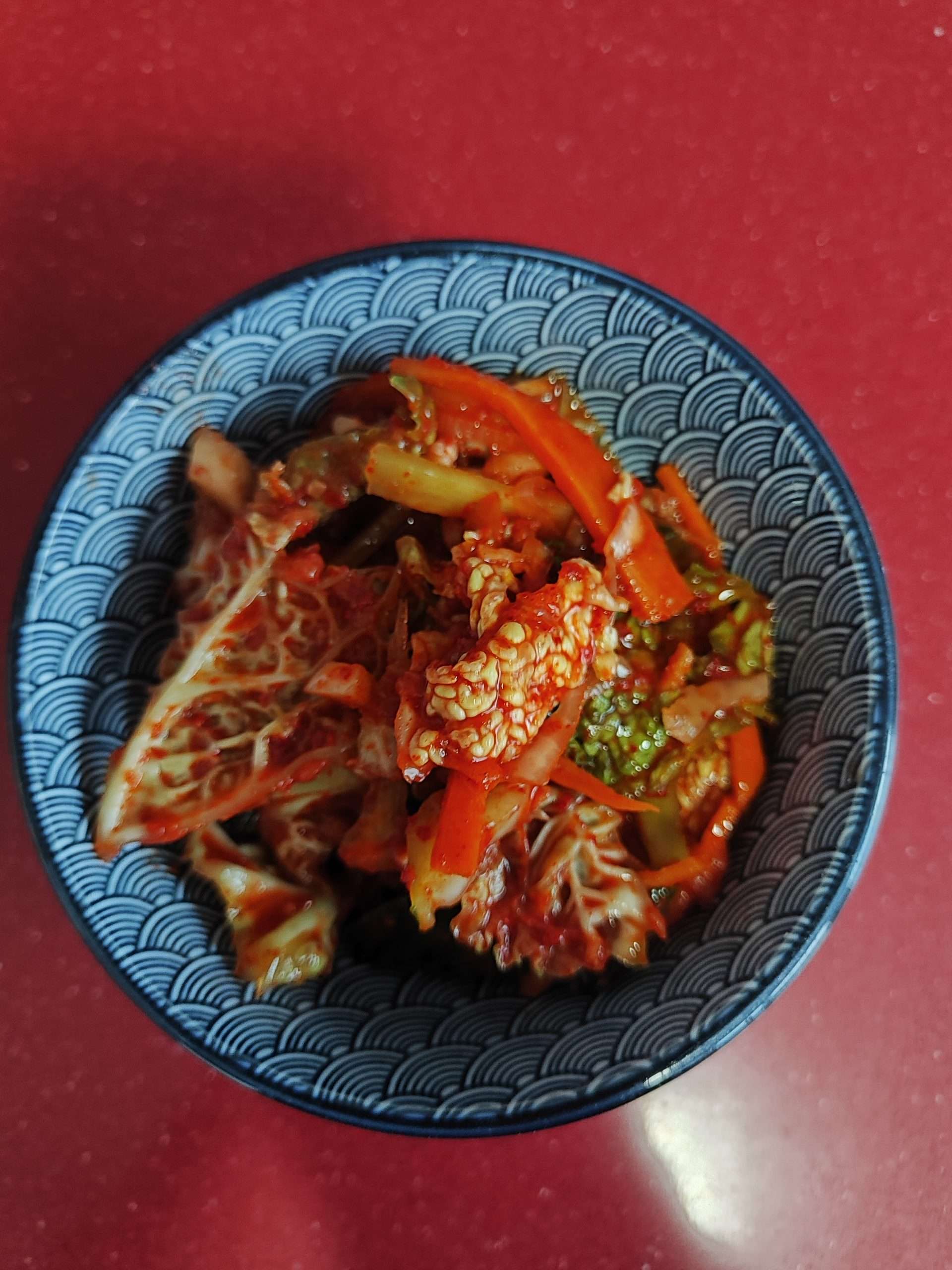
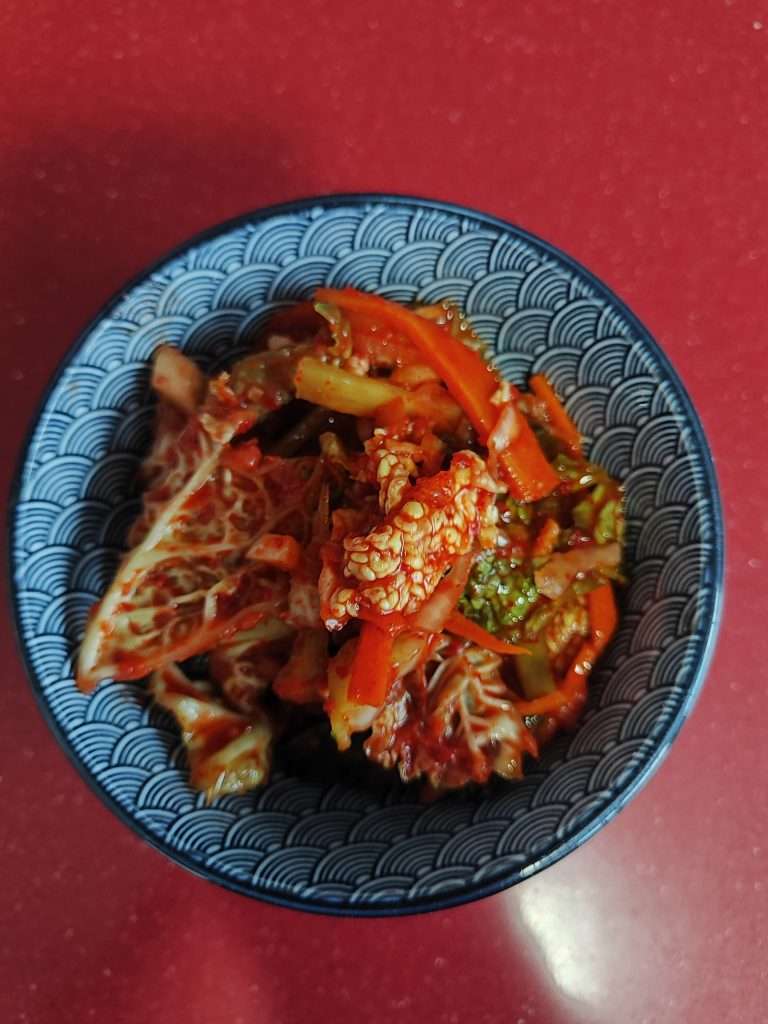
Kimchi, the popular Korean fermented dish, is packed with probiotics and prebiotics. This dish offers a serious boost to your gut health and microbiome. Salt meets vegetables, along with bright chili powder, and time works its magic. The result is a complex, tangy flavor teeming with beneficial bacteria.
Kimchi equal parts tasty and health-promoting. I’ve made it my goal to eat more fermented foods like kimchi. Plus, making your own kimchi is an incredibly satisfying project and allows you to be creative with different vegetables and put your own signature on it.
This versatile recipe isn’t traditional but remains delicious. Shoutout to Alissa Nguyen, who inspired me with her Shortcut Kimchi method, which works amazing every time. I follow that formula and put my own twist on it. I love using what I have on hand—so feel free to get creative with different veggies. Research has shown that fermented foods can improve immune function and lower inflammatory proteins, making kimchi both tasty and functional. (1) Here’s how to make it at home!
Ingredients:
Vegetable and Fruit Mix:
- ½ savoy cabbage*, core removedchopped into thumb-sized pieces
- 1/2 head cauliflower leaves**, washed and sliced thin
- One broccoli stem, peeled, julienned and sliced thin
- ½ onion, julienned
- 2 carrots, peeled and julienned
- 4 green onions, trimmed and sliced to match the carrots
- 1 small pear, peeled and grated
- 1/2 ripe persimmon
- 1 tbsp finely chopped ginger
- 1/3 cup garlic, minced (9-10 cloves)
The Sauce:
- 1.5 tbsp sugar
- 1/3 cup fish sauce
- ½-3/4 cup gochugaru (Korean chili flakes)
- Hot water, as needed
- Salt, for prepping the cabbage
Instructions for Easy Kimchi:
- Prep the Cabbage: In a large bowl, cabbage, cauliflower leaves and broccoli stem. Sprinkle generously with salt, and cover with water. Let it sit while you prepare the other ingredients.
- Prepare the Sauce: Grate the pear and persimmon into a bowl. Add sugar, fish sauce, and gochugaru. Add the carrot, green onion, garlic and ginger. Stir in a bit of hot water unto the mix until the sauce becomes a vibrant red paste.
- Rinse the Cabbage: After soaking, rinse the cabbage/other veggies thoroughly with cold water several times to remove excess salt. Squeeze out as much liquid as possible and transfer the cabbage to a clean bowl.
- Combine Everything: Add the prepared sauce to the cabbage. With clean hands (or food-safe gloves), massage the sauce into the cabbage until all pieces are evenly coated. The mixture should look coated, a beautiful bright well-seasoned red.
- Ferment the Kimchi: Transfer the kimchi into a clean container or jar, pressing it down firmly. Cover loosely and let it sit on the counter for 6 or more hours to start fermentation and allow the kimchi to develop that signature tang. Then, move the container to the refrigerator.
- Enjoy: Your homemade easy kimchi is ready! It’ll continue to ferment and deepen in flavor, although I prefer it more on the younger fresher, crunchy side.
Nutrition Information (1/2 cup)
- Estimated Nutritional Values (½ cup serving):
- Calories: 40 kcal
- Protein: 1.3 g
- Fat: 0.3 g
- Carbohydrates: 8 g
- Fiber: 2 g
- Sugar: 4.5 g
- Sodium: 800 mg
- Probiotics: High
Notes:
*I did not have Napa cabbage on-hand so I used what was available to me. I also threw in a random leftover piece of turnip. Get creative with what you have.
**You can use some cauliflower florets as well for a great texture.
If you need to monitor sodium intake, you can use a reduced-sodium option. There are many available on the market. Also, just be mindful of the portion size.
Serving Suggestions: Add kimchi to eggs, salads, or grain bowls for an instant flavor boost…Or, pair it with grilled meat, rice dishes, or noodle soups. Enjoy it straight-up as a probiotic-packed snack.
Have you made kimchi at home? Share your favorite variations in the comments below!
Source:
1.) Stanford Medicine. (2021, July 12). Fermented-food diet increases microbiome diversity, lowers inflammation. Stanford Medicine News Center. https://med.stanford.edu/news/all-news/2021/07/fermented-food-diet-increases-microbiome-diversity-lowers-inflammation